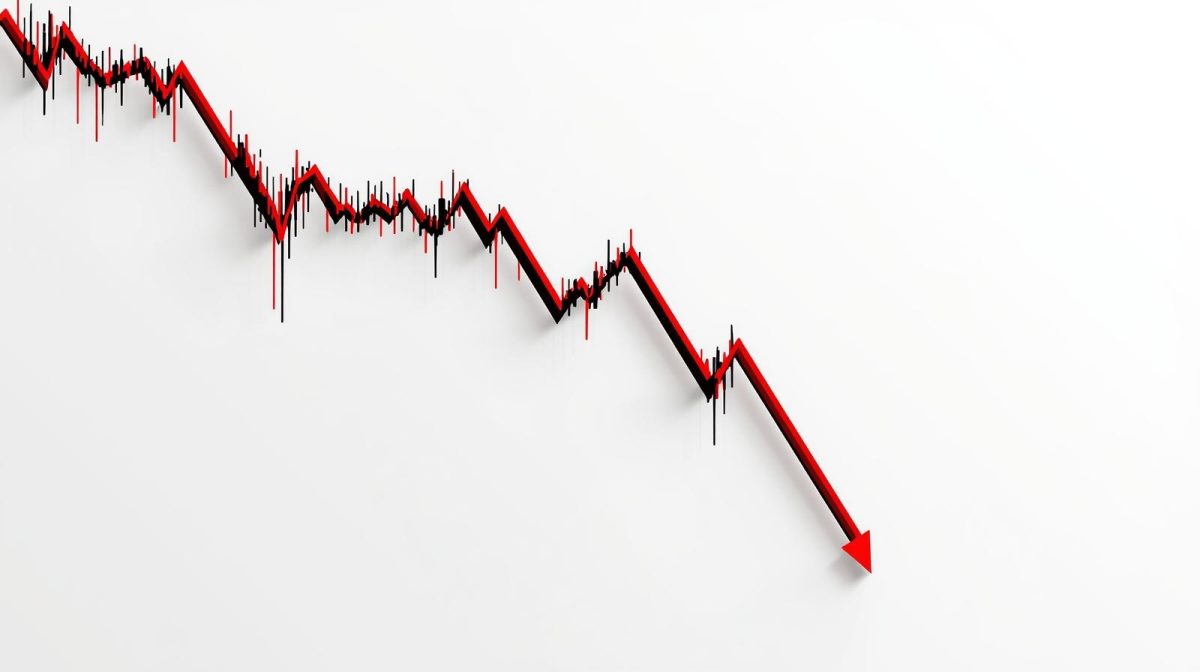
Depressions are an economic nightmare, and one of the worst things to live through. The United States has experienced only one depression in modern history, and because of its severity, it earned the name of The Great Depression.
A recession is an extended period of negative economic growth. A good rule of thumb is two consecutive quarters of negative GDP growth. Gross Domestic Product (GDP) is a rough estimation of the value of the economy. The worst one the U.S. experienced was the Great Recession from 2007-2009. The current U.S. GDP is around $30 trillion.
A depression, on the other hand, is just an extreme recession. A depression is generally considered to be a recession that lasts longer than three years or causes a decline in GDP by 10% per year.
Even though they sound similar and have similar definitions, don’t get recessions and depressions confused. Recessions are common; in fact, the U.S. has experienced 32 recessions since 1854.
In modern times, recessions have become less common and less severe due to certain policies that help reduce the effects of recessions. But with increased economic uncertainty and rising government debt, there is a fear that a second Great Depression could occur. So, to fully understand the weight of that statement, we need to look at the first Great Depression.
The Lead Up to The Great Depression
In 1907, there was a financial crash, called the Panic of 1907, caused due to runs on banks. This downturn was largely due to irrational behavior and panic. In the wake of this, the Federal Reserve Bank (often called the FED) was created to prevent another panic.
In 1917, the US entered World War 1 and played a major role in ending it in 1918. Even before they officially declared war on Germany, the US was already providing support to the allies.
Wartime production caused an economic boom. During this period, the FED was very lax with the regulation of money to prevent mass corporate losses. They were hoping to slowly, and unpainfully, convert to a peacetime economy. However, due to the FED’s inexperience (only being created ten years ago), they failed.
In 1919, the Wilson administration, along with the FED, over the course of the year, cut federal spending by 75% and raised FED interest rates from 1.25% to 6.00%. This extreme response caused a recession.
The forgotten Recession 1920-1921, sometimes mislabeled as a depression, was one of the worst recessions in modern US history. The stock market fell by 50% and corporate profits declined by over 90%. An unintended stimulus package driven by the future president of the US, Warren Harding, ended the economic downturn quickly, making the Forgotten Recession short but quite painful.
Stimulative measures were put in place, leading to an economic boom called the Roaring 20’s. Gradually, this boom began to slow down; however, the stock market kept up its rapid growth. The stock market became greatly inflated. In this speculative and inflated environment, the stock market fluctuated wildly before eventually realizing how unsustainable this growth was. Some began to sell their stocks, which caused others to sell their stocks, culminating in a frenzied mass sell-off on October 24th, 1929, also known as Black Thursday.
The Great Depression
There was a small rally to pump up stocks again, but this rally didn’t last long. On October 29th, 1929, also known as Black Tuesday, the stock market collapsed even further. This is commonly seen as the beginning of the Great Depression.
The average American did not have any money invested in the stock market; however, due to its collapse, economic uncertainty spread throughout the country. Due to increased uncertainty, there was a reduction in how much people bought, causing businesses to lose money, so they laid off workers. As more people were laid off, greater economic uncertainty was spread, restarting the cycle, entering what’s called a death spiral. Parts of the economy collapsed, causing other parts to collapse, deepening the depression. This economic collapse eventually spread throughout the entirety of the US.
Many companies filed for bankruptcy, and even more people lost their jobs, so the government lost its tax revenue, preventing it from paying back its debts or supporting the unemployed.
The economic uncertainty led to panic, where everyone all at once pulled their money out of the banks, causing what’s called a bank run. The banks did not have enough cash on hand to pay everyone, so they filed for bankruptcy, and many people did not get their money back. At least 7,000 banks collapsed.
The decrease in the money supply raised the actual value of the dollar, as well as all debt held in the dollar. Paying back debts became more difficult, so defaults rose; farmers were hit especially hard by this.
The Fed failed to create money, which would have stimulated the economy, and watched, from 1929-1933, as the entire economy collapsed.
In 1933, the height of the depression, the stock market had fallen by 90%, real GDP had fallen by 30%, and US production had dropped by 47%.
The unemployment rate of 3.2% in early 1929 had soared to just under 25% by 1933; however, this unemployment number does not include farmers, who were devastated during this period. It is possible that the true unemployment rate was even higher than 25%.
Even those who were lucky enough to keep their jobs had their income fall by 42.5% between 1929 and 1933. In response, wage protections were instilled, preventing companies from lowering wages. Those companies, though, were making less money, so they were forced to lay off workers.
This made the labor market much more restrictive, so only the most productive workers were kept. Those with disabilities were prevented from getting jobs.
Stickiness in the labor market meant that employed workers were only employed because they were productive; those who got laid off were less productive, so the unemployed were unlikely to be reemployed because they were not seen as replacements for the currently more valuable and employed workers. Having a disability, at this time, crippled your job opportunities.
The Dust Bowl was occurring at this time as well.
Over-farming in the Roaring 20s destroyed the topsoil, which is what keeps the soil in the ground. When a severe drought hit, the land became completely unfarmable, and the now weakened soil was swiftly picked up by the winds of the Great Plains, becoming dust storms that were miles wide. Hundreds of thousands of people were forced to flee their homes. These people were often called ‘Okies,’ and most of them fled to California for jobs, ending up in “Hoovervilles,” which were just settlements made from abandoned cars, packing crates, and scraps.
35 million acres of formerly cultivated land became completely unusable, while another 125 million acres were rapidly losing their topsoil.
With farmers losing their jobs, crop prices were driven up, so many people began to start their own gardens and grow their own food.
During this tumultuous time, misguided isolationist ideals took over, which ultimately hurt the economy even more.
Tariffs (a tax on foreign goods) drove up prices, namely the Fordney-McCumber Tariff and the Smoot-Hawley Tariff. The Fordney-McCumber Tariff brought the import tax to ~40%. Then the Smoot-Hawley Tariff raised those taxes by another 20%. These tariffs triggered counter-tariffs by countries like Great Britain and Canada.
Global trade fell apart, with US imports in particular dropping off a cliff.
Herbert Hoover was the president from 1929-1933. He signed into law wage protections and the Smoot-Hawley Tariff. He cut immigration substantially, increased government spending by over 48%, and raised personal income taxes as well as corporate taxes.
In 1933, when Hoover was campaigning to be reelected, he used a lot of New Deal-like rhetoric, and while he did not win, many of his plans would be put into place by the winner of the election, Franklin Delano Roosevelt, including his most famous policy, the New Deal.
In 1933, the economy was beginning to show signs of recovery, and while things still weren’t great, they were finally starting to get better.
Great Depression Internationally
Great Britain
The stock market speculation and subsequent collapse were not contained to just the U.S; British stock markets were driven by that same speculation and risky investments, even more so than the U.S. Much of the developed world was devastated by this stock market collapse, including Britain.
Britain’s economy was fueled by exports, leaving it devastated after the global trade collapsed, and it even faced a currency devaluation crisis when American investment was rapidly pulled out of Britain.
Despite these factors, Britain was less impacted than most other countries; this is not to discredit its strength, more rather to illustrate just how terrible the others were. This was due to their diversified economy, so on one end of the extreme, there were towns that reached unemployment levels of 68%, while other areas only dipped a couple of percent.
At its peak, 2.75 million people became unemployed in Britain.
Unable to feed themselves, citizens went on hunger marches, where hundreds, sometimes thousands, would march. In return, the government cracked down by increasing police presence and spies.
In Great Britain, they were still recovering from World War I when they got hit by American tariffs, namely the Smoot-Hawley Tariff. Britain began focusing on protectionist policies, including a counter-tariff to the United States, causing international trade to collapse. In the wake of the crisis, foreign investment fled the country, forcing the British government to make up the spending, so they began running a deficit of 120£ million. In an attempt to balance the books, they introduced cuts to unemployment benefits to balance the budget.
Canada
Canada was severely affected, but in unequal ways. Some areas were already in an economic decline beforehand, so they couldn’t fall much further, while others were crippled by the decline, but others were not greatly affected due to distributed investments. This period of Canadian history became known as the Dirty Thirties.
One third of Canada’s Gross National Product (GNP) was reliant on imports, leaving them devastated by the collapse of global trade, especially Canada’s four Western provinces that were even more reliant on imports than the rest of the nation.
Overall, GNP fell by 42% and unemployment peaked at 30%. The unemployment rate stayed above 12% until the beginning of WW2 in 1939. One in five Canadians became dependent on government relief for survival.
During this period, farming was devastated by a combination of droughts, hailstorms, and grasshopper plagues, forcing 250,000 homesteaders to abandon their homes. The price of crops dropped dramatically, too, with wheat hitting its lowest recorded price in history in some areas.
At first, the government was unwilling to help. The general public insisted that local governments take that responsibility, and the prime minister was reluctant to even acknowledge the economic crisis.
Eventually, public outcry led to the creation of unemployment benefits, a federal bank, and social welfare programs.
Refugee camps were eventually set up, where workers were paid $0.20 per day for manual labor, and a protest of the poor labor conditions turned violent. There were other bloody riots, including the Regina Riot, as well as Bloody Sunday.
Japan
Japan had always pursued a policy of isolationism, so when the global economy collapsed, Japan was not as harmed as much as other countries, but it still felt pain. Due to a combination of Japan’s militarization and the efforts of the finance minister, Takahashi Korekiyo, Japan recovered from the Great Depression far quicker and felt less economic pain than most other developed countries. This militarization, ultranationalist beliefs, and racist ideals eventually led to the Japanese invasions’ other countries as well as their joining the Axis powers.
Germany
Out of any other country in the world, Germany was hit hardest by the Great Depression.
In the aftermath of WW1, Germany had to pay war reparations through the Treaty of Versailles. To pay these reparations and pay off their debt, they printed money, leading to a period of hyperinflation during the 20’s. The Dawes plan, America loaned Germany money; however, this led to a dependence on American investment.
Furthermore, Germany was an export-dependent country.
In 1929, when the Great Depression began, American lenders pulled their money out of Germany, leaving it debt-ridden, and the collapse of the global economy meant that they were unable to export their goods.
The German government focused on preserving the gold standard and paying back their war reparations, which prevented them from supporting their people. Unemployment surged from 1.4 million in 1929 to 6.1 million in 1932.
Many German people turned towards political extremism. The Nazi Party grew in support from 2.6% of the vote in 1928 to 37% in 1932. Adolf Hitler’s appointment as chancellor in 1933 led to a consolidation of power and the dismantling of democracy.
The quickest and easiest way to save the economy was resource extraction and militarization, even at the cost of civil liberties, but this period of extreme growth was unsustainable. Due to the combined fears of another depression, their re-militarization, and a nationalistic people, Nazi Germany decided to invade Poland, starting World War 2.
Recovering from The Great Depression
The United States’ recovery was slow at first, but accelerated at the beginning of World War 2. The U.S. did not enter the war until 1941, but it did supply the Allies before they joined. The war overseas caused an insatiable demand for goods from the countries involved in the war, causing an industrial boom, even before the U.S. officially entered the war.
This growth did not happen overnight, though, as businesses were reluctant to transfer to wartime production, especially since they were not actually in the war. It was only after Pearl Harbor and the U.S. entering the war did many businesses switched to wartime production.
The production of many civilian goods, like cars, refrigerators, toasters, etc., had a remarkable slowdown or stopped altogether; this was to save the resources and labor for weapons, planes, and various other wartime goods.
Pro-business laws, like tax incentives and tax breaks, were enacted, as well as encouraging businesses to cooperate to produce more, rather than compete.
The extraordinary demand reversed the rampant unemployment, as the United States reached a functional maximum employment of 98% during World War 2. Labor shortages soon became commonplace, and even in critical industries, 48-hour workweeks were mandated.
Franklin Delano Roosevelt was president from 1933 to 1945, and soon after his inauguration, he declared a “Banking Holiday” to end runs on banks. However, arguably Franklin Roosevelt’s most famous policies was his “New Deal.” The New Deal expanded the function of the government greatly, with roughly 50 agencies (called the Alphabet Agencies) being created to create jobs, deliver electricity, stabilize food prices, deliver billions of dollars in unemployment aid, and more.
One of the more notable agencies created during this time was the Works Project Administration. The WPA employed nearly 8.5 million people on public works projects like creating parks, roads, and schools. They also performed plays and musicals, like Macbeth, for the people.
To fund these agencies, the government had to go into debt, increasing the deficit by tens of billions. Concerns of insolvency drove the government to drastically pull back spending in 1937, leading to the recession of 1937. It would not be until 1939 that the U.S. was finally able to escape the Great Depression; however, it was only until 1941 that it was able to fully recover. The unemployment statistic peaked at just under 25% in 1933 and remained in the double digits until 1941, when it finally fell to 9.66%.
Despite the pain the Great Depression brought, without it, we would not have the Federal Deposit Insurance Corp. The FDIC, which ensures the money that you place into banks, the regulation of securities markets, the birth of the Social Security System and the first national minimum wage.